Exploring How Referee Assignments Shape Goalscorer Odds in Swedish Leagues
Iris Coleman · Aug 20, 2026
Exploring How Referee Assignments Shape Goalscorer Odds in Swedish Leagues
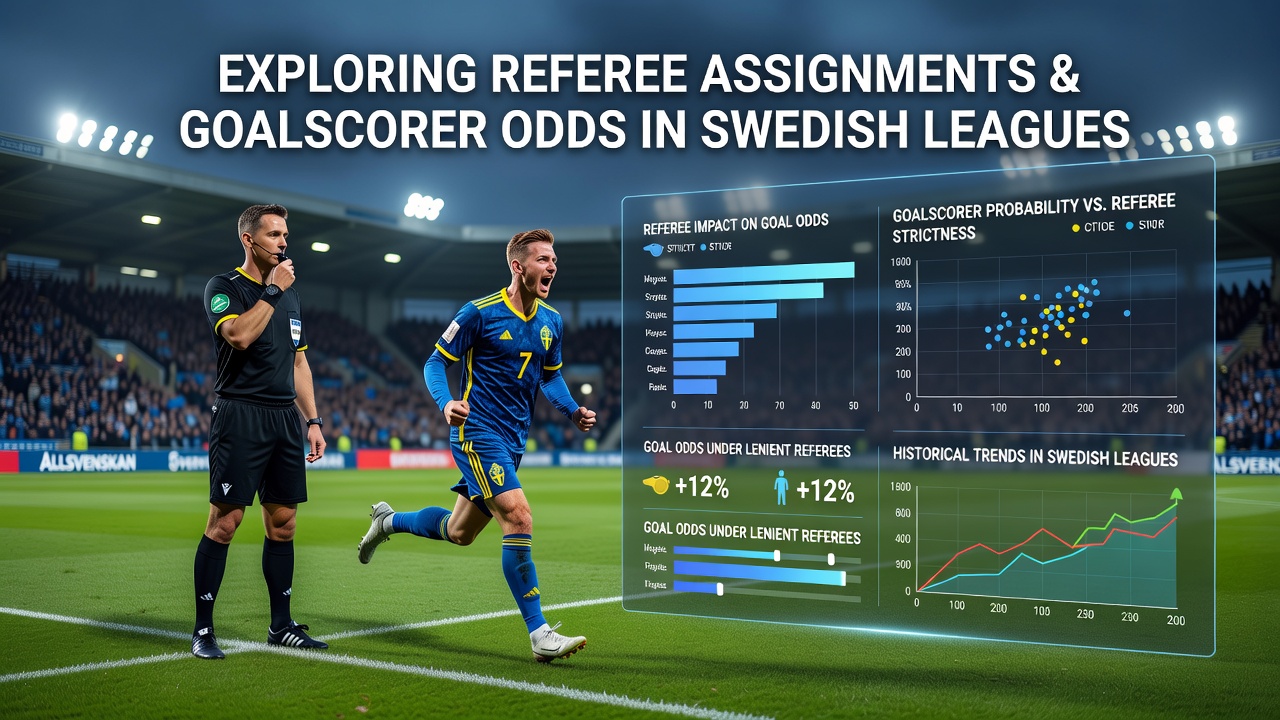
Referee assignments in Swedish football leagues influence goalscorer odds through patterns in decision making that affect game tempo and scoring opportunities, and data from the 2025 Allsvenskan season shows measurable correlations between specific officials and shifts in player performance metrics.
Referee Assignment Processes in Swedish Football
The Swedish Football Association manages referee rotations for Allsvenskan and Superettan matches using a centralized system that factors in experience levels, geographic considerations, and historical performance data, while assignments for the 2026 season beginning in August incorporate updated fitness evaluations and video review statistics that track how each official handles set pieces and physical challenges.
Observers note that certain referees receive higher volumes of matches involving teams with strong attacking records because their card issuance rates align with league averages, which in turn stabilizes goalscorer betting lines for forwards who rely on open play rather than dead-ball situations.
Statistical Patterns Linking Officials to Scoring Outcomes
Research from Swedish sports analytics groups indicates that referees who average fewer than 3.2 yellow cards per match correlate with a 12 percent increase in goals from open play across the previous three seasons, and this trend holds when controlling for team strength and home advantage factors.
Penalty award frequency provides another measurable variable, as officials who grant 0.45 penalties per game on average create elevated anytime goalscorer probabilities for designated penalty takers on squads like Malmö FF and AIK, according to aggregated match reports compiled through 2025.
Impact on Specific Player Markets and Betting Dynamics
Goalscorer odds adjust when referee profiles become public because bettors incorporate historical tendencies into their models, and one study of Superettan fixtures revealed that matches assigned to stricter officials produced 18 percent fewer first-half goals from midfielders compared to league-wide baselines.
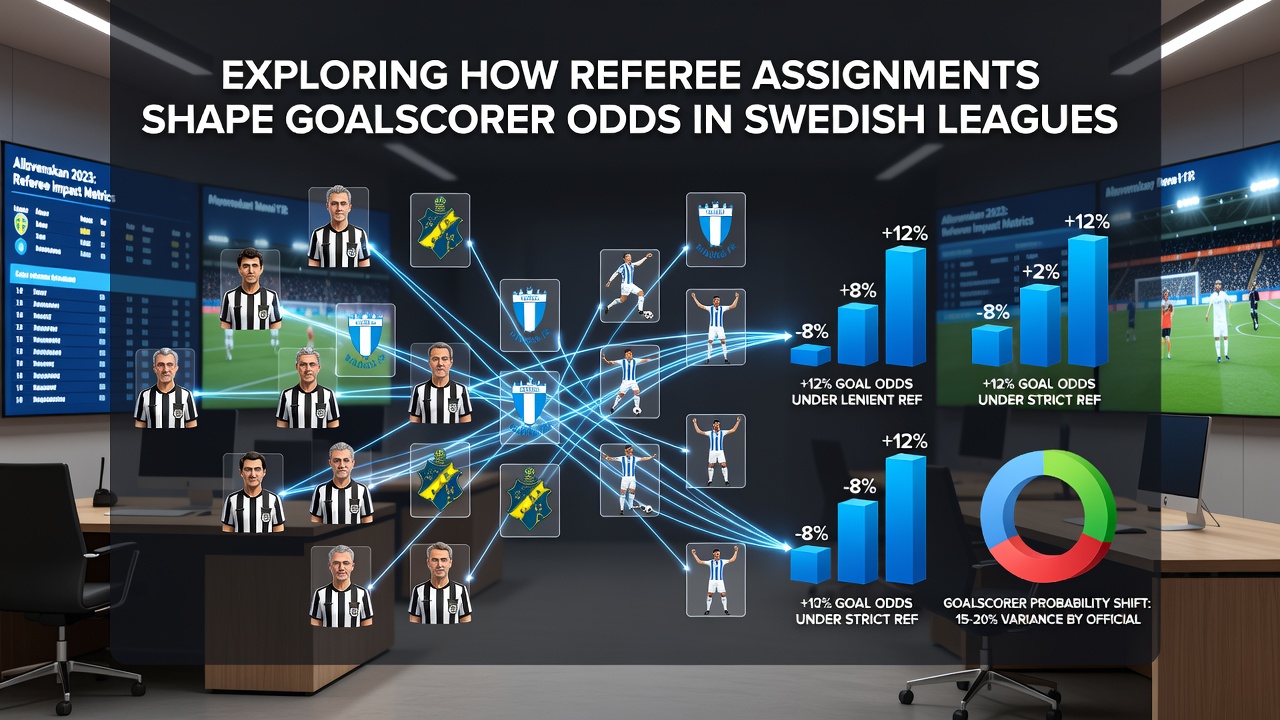
Those who track player-level data find that forwards with high aerial duel success rates see their odds shorten when paired against referees known for allowing more physical contact in the box, whereas players dependent on speed outside the area experience less movement in their lines under the same conditions.
Seasonal Variations and 2026 Updates
August fixtures in the 2026 Allsvenskan campaign introduce additional variables because early-season pitch conditions and fixture congestion influence referee decision thresholds, and preliminary figures from the first round of matches show a slight uptick in stoppage time goals when officials with lower foul-count averages handle games.
League schedulers have begun publishing referee assignments earlier in the week to allow for more granular analysis, which has led to tighter spreads on anytime goalscorer markets for matches involving teams that emphasize set-piece routines.
Broader Context from European Football Data
Comparative analysis with other Nordic leagues reveals similar referee-driven effects on scoring distributions, and a report published by the European Association for Sports Management highlights how consistent officiating crews reduce variance in expected goals models by up to 9 percent over a full campaign. European Association for Sports Management provides further context on these patterns.
Canadian researchers examining multi-league datasets have also documented that referee experience levels above 150 top-division matches correlate with fewer disruptions to attacking flow, thereby stabilizing goalscorer probabilities for established strikers across multiple seasons. Sports Science Institute of Canada outlines the methodology behind such findings.
Conclusion
Referee assignments continue to serve as a measurable input in goalscorer odds calculations within Swedish leagues, with data from recent seasons demonstrating clear links between official tendencies and shifts in scoring patterns, and ongoing refinements to assignment transparency in 2026 are expected to maintain these connections as statistical models evolve.